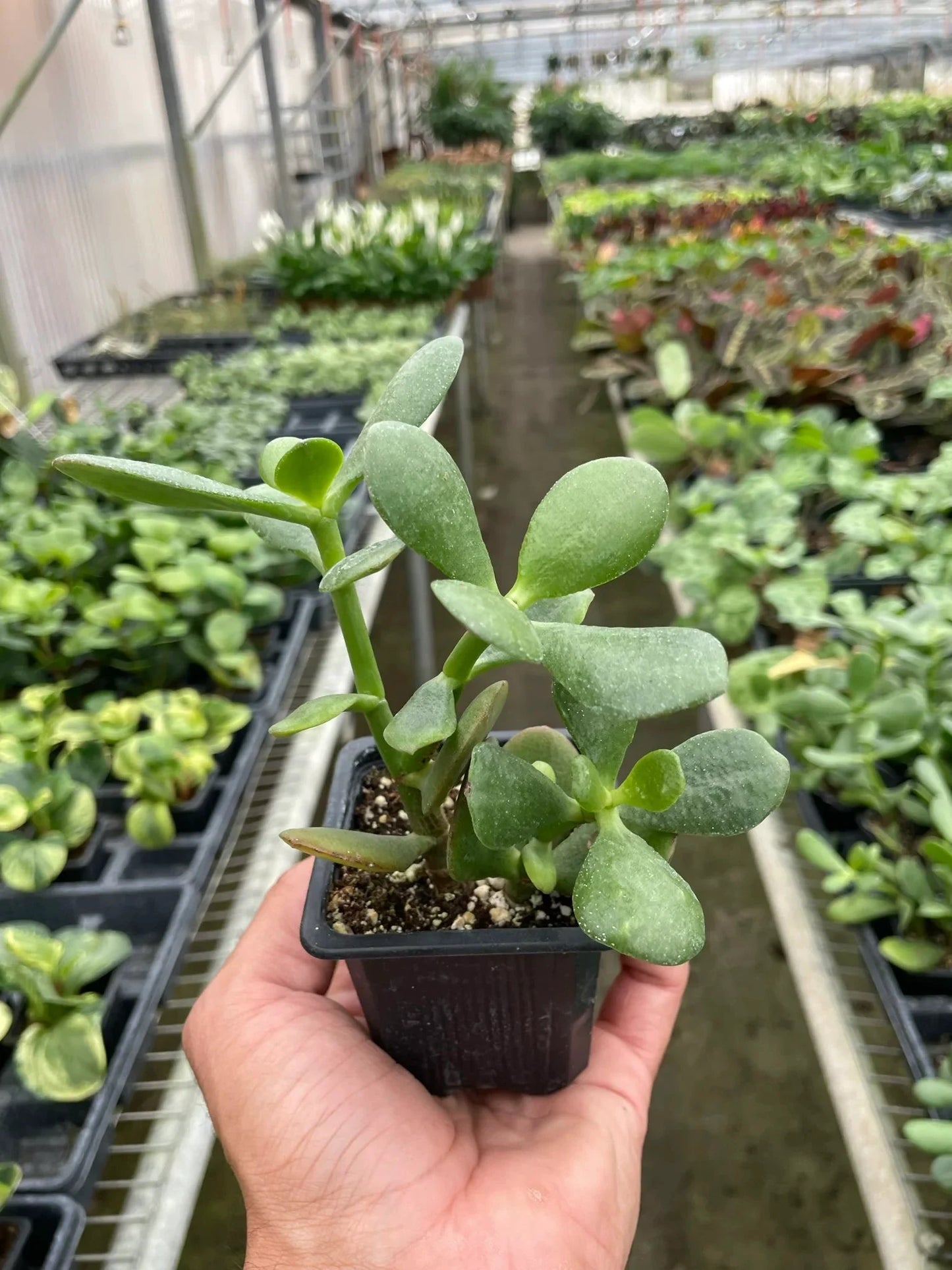
Jade Plant (Crassula Ovata) Live Houseplant Low-Water Foliage
Sourced from trusted local U.S. plant nurseries
Carefully inspected for pests and diseases before shipping
Shipped with eco-friendly packaging and care tips
Includes heat packs during cold weather to prevent freezing
Jade Plant Introduction: The Jade Plant (Crassula ovata) is an evergreen succulent native to South Africa that brings durable, low-water foliage and subtle seasonal blooms to indoor spaces. Its fleshy, finger-like leaves develop rich red edging in bright light, giving your windowsill a sculptural, confident presence.
Why You Need a Jade Plant
The Jade Plant adds a calm, architectural accent to bright windowsills or office shelves, helping create a subtle indoor jungle vibe while requiring minimal houseplant care and infrequent watering.
Key Features
- Foliage: Fleshy green leaves with red-edged margins when exposed to bright light; glossy and compact
- Dimensions: Current shipping size varies; upright, container-friendly form suitable for small spaces
- Growth Habit: Upright, shrub-like structure
- Origin: Native to South Africa
Jade Plant Care Guide
- Light: Bright indirect sunlight; can tolerate a touch of direct sun to intensify leaf reddening.
- Water: Wait until the top 2 inches of soil dry; keep in well-draining soil to aid root rot prevention.
- Humidity: Normal indoor humidity; tolerates drier air.
Safety Note
Is the Jade Plant pet-safe? No, the Jade Plant is toxic to pets. If ingested by cats or dogs, contact a veterinarian promptly and keep the plant out of reach.
Horticulturalist's Pro-Tip
Rotate the plant a few degrees weekly to promote even light exposure and a balanced, upright shape; use a breathable potting mix to optimize drainage.
Add this timeless, low-maintenance Jade Plant to your collection today and enjoy effortless greenery with year-round charm.
Frequently Asked Questions
How much light does a Jade Plant need to stay vibrant?
A Jade Plant thrives best in bright, indirect light, though the Jade Plant can tolerate lower light conditions at the cost of slower growth.
How often should I water my Jade Plant to avoid root rot?
To keep your Jade Plant healthy, water only when the top two inches of soil are dry, as the Jade Plant is susceptible to root rot in standing water.
What kind of soil does a Jade Plant prefer?
Jade Plant favors well-draining soil, such as a cactus/succulent mix, to support healthy roots and prevent overwatering; this is essential for long-term Jade Plant vitality.
Can the Jade Plant tolerate low light levels?
Yes, the Jade Plant can tolerate lower light, but growth slows and color intensity may diminish; for best results, boost to bright indirect sunlight when possible with your Jade Plant.
How do I propagate a Jade Plant?
Propagate a Jade Plant by leaf or stem cuttings; allow cut ends to callus, then plant in well-draining soil and water sparingly. Jade Plant cuttings root readily and can expand your indoor garden quickly.
What is the best way to prune a Jade Plant for shape?
Prune Jade Plant in the growing season to maintain a compact, balanced shape; remove leggy growth and pinch tips to encourage branching, guiding the Jade Plant toward a fuller, more resilient form.
Is the Jade Plant toxic to pets?
The Jade Plant is toxic to pets. If ingested by cats or dogs, contact a veterinarian promptly and keep the plant out of reach. This Jade Plant safety note helps prevent accidents in homes with curious animals.
How often should I fertilize my Jade Plant?
Feed every 4-6 weeks during the growing season with a balanced, water-soluble fertilizer; dilute to half strength and avoid fertilizing in winter. This provides nutrients for the Jade Plant while preventing fertilizer burn in your indoor jungle.
What is the mature size of a Jade Plant?
Jade Plant can reach several feet tall in ideal conditions, but as a compact upright houseplant it often stays within 1-3 feet indoors, making it perfect for shelves and desks in your Jade Plant collection.
Does Jade Plant require high humidity?
Jade Plant tolerates normal indoor humidity; it adapts to drier air typical of homes and offices, which keeps maintenance simple for houseplant care of the Jade Plant.
How do I prevent root rot in a Jade Plant?
Root rot prevention for the Jade Plant starts with well-draining soil and a pot with drainage holes; water only when the top inch of soil is dry and avoid leaving the plant in standing water.
Should I repot my Jade Plant, and when?
Repot a Jade Plant when it becomes root-bound or each 2-3 years, using a well-draining succulent mix; choose a slightly larger pot to support healthy growth in your Jade Plant.
What temperature range is best for the Jade Plant?
Jade Plant thrives in average room temperatures between 65-75°F (18-24°C); protect from freezing drafts to preserve the Jade Plant's well-being.
Why are the leaf tips turning brown on my Jade Plant?
Brown tips on the Jade Plant often indicate underwatering, low humidity, or excessive sun; adjust watering, humidity, and light to suit since the Jade Plant is sensitive to these factors.
Is the Jade Plant a good choice for an indoor jungle look?
Yes, the Jade Plant's sculptural, glossy leaves and compact form make it a staple for an indoor jungle vignette with a calm, architectural vibe through the Jade Plant.
Can I grow a Jade Plant in water or hydroponically?
Jade Plant generally grows in well-draining soil; while cuttings can root in water, for best long-term health with the Jade Plant, transfer to well-draining soil to establish robust roots and growth.
Does the Jade Plant flower indoors?
Yes, the Jade Plant can produce subtle seasonal blooms in favorable light; with proper Jade Plant care, you may enjoy tiny white or pink star-like flowers during the season.
How often should I rotate a Jade Plant for even light?
Rotate the Jade Plant a few degrees weekly to promote even light exposure and a balanced, upright shape, helping it maintain a strong, appealing silhouette as part of your Jade Plant care routine.
Is the Jade Plant safe for households with children?
As with pets, keep the Jade Plant out of reach of children, since it is toxic if ingested; proper placement ensures safe enjoyment within your indoor jungle environment, the Jade Plant helps you achieve.
What pests commonly attack the Jade Plant and how do I treat them?
Common Jade Plant pests include mealybugs, scale, and spider mites; inspect regularly and treat with alcohol swabs, horticultural oil, or insecticidal soap while ensuring no contact with pets or kids, the Jade Plant remains resilient with prompt houseplant care.
Have a question?


Jade Plant (Crassula Ovata) Live Houseplant Low-Water Foliage
Frequently Asked Questions
We Stand Behind Our Brand