Skip to product information

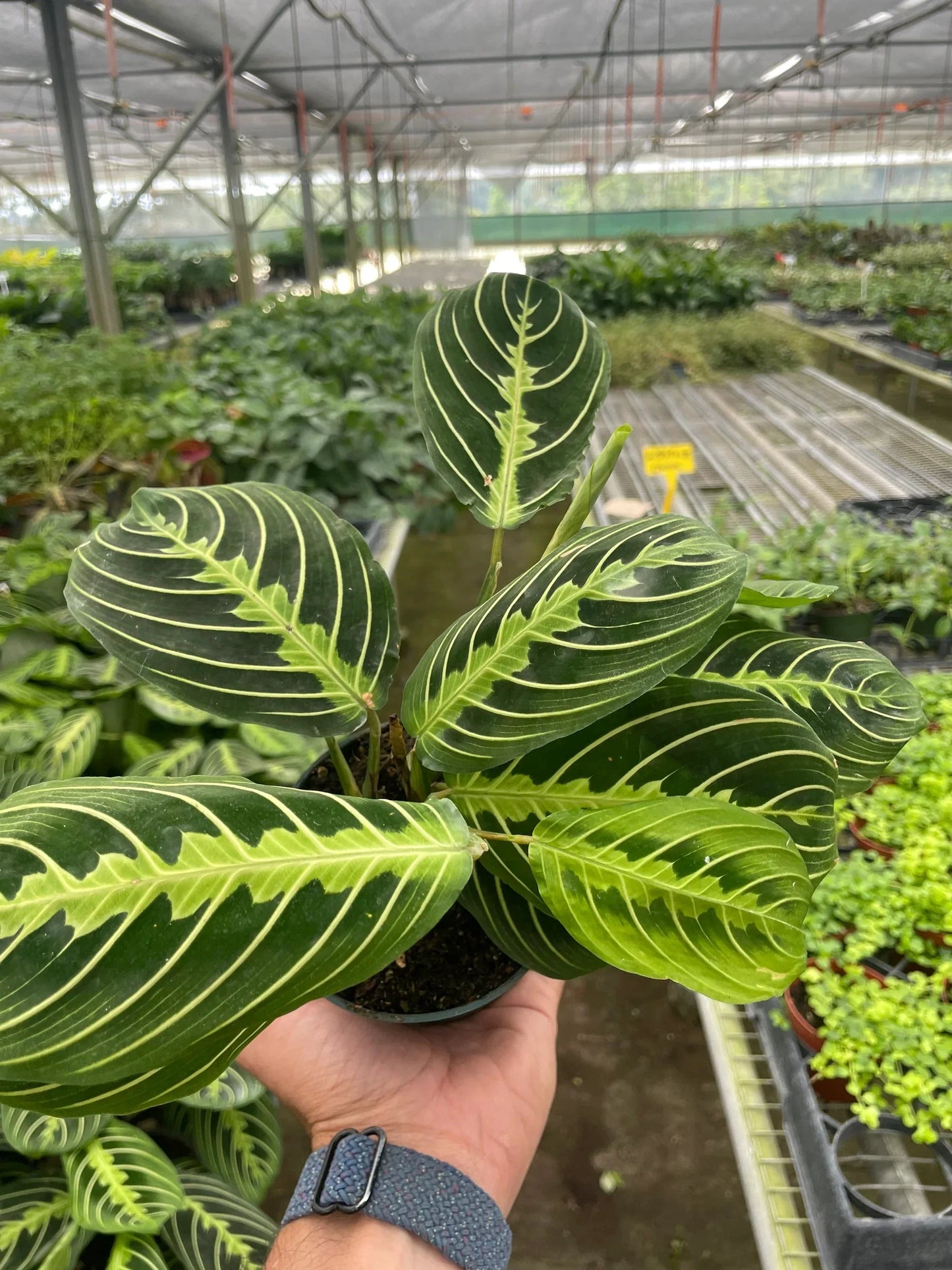
    Maranta Lemon Lime Prayer (Maranta leuconeura) Live Houseplant

    $32.00 USD
     per 
    Shipping calculated at checkout.
    In stock!

    Sourced from trusted local U.S. plant nurseries

    Carefully inspected for pests and diseases before shipping

    Shipped with eco-friendly packaging and care tips

    Includes heat packs during cold weather to prevent freezing

    Size: 4" Pot

    Product description

    Maranta Lemon Lime Prayer Introduction: The Maranta Lemon Lime Prayer (Maranta leuconeura) captivates with neon-green venation on dark, glossy leaves and nyctinastic movement that folds gracefully at night. This rainforest native thrives in low to bright indirect sunlight, turning shaded corners into a living display of color and motion.

    Why You Need a Maranta Lemon Lime Prayer

    The Maranta Lemon Lime Prayer cleans indoor air, boosts mood with its vibrant foliage, and serves as sculptural living decor. In bright indirect light, its leaf pattern truly shines, elevating an indoor jungle vibe on shelves, windowsills, or hanging baskets. A stylish, approachable path to houseplant care for beginners and enthusiasts alike.

    Key Features

    • Foliage: Neon-green veins on dark green leaves with reddish-purple undersides; oval, slightly wavy texture
    • Dimensions: Typically shipped in a standard pot; growth can trail and fill a 12–18 inch space with proper humidity
    • Growth Habit: Trailing/clumping
    • Origin: Native to humid rainforests of Central and South America; common in cultivation

    Maranta Lemon Lime Prayer Care Guide

    • Light: Bright indirect sunlight is ideal; tolerates lower light but color fades.
    • Water: Keep soil consistently moist but not soggy; wait for the top 2 inches to dry to aid root rot prevention.
    • Humidity: Prefers higher humidity; mist regularly or use a humidity tray.

    Safety Note

    Is the Maranta Lemon Lime Prayer pet-safe? Yes, the Maranta Lemon Lime Prayer is non-toxic to cats and dogs, making it a pet-friendly choice for homes.

    Horticulturalist's Pro-Tip

    Rotate the plant monthly to promote even growth; use well-draining soil and maintain steady humidity to maximize nyctinastic movement.

    Bring home the Maranta Lemon Lime Prayer today and let its living decor transform your space into a vibrant, calming corner.

    Frequently Asked Questions

    How much light does a Maranta Lemon Lime Prayer need to stay vibrant?

    A Maranta Lemon Lime Prayer thrives best in bright, indirect sunlight, though the Maranta Lemon Lime Prayer can tolerate lower light conditions at the cost of slower growth.

    How often should I water my Maranta Lemon Lime Prayer to avoid root rot?

    To keep the Maranta Lemon Lime Prayer healthy, water only when the top two inches of soil are dry, as the Maranta Lemon Lime Prayer is susceptible to root rot in standing water.

    What temperature range is best for the Maranta Lemon Lime Prayer?

    The Maranta Lemon Lime Prayer prefers a stable environment around 65–75°F (18–24°C); keep it away from cold drafts, which can stress the plant and dull leaf color.

    How can I increase humidity for the Maranta Lemon Lime Prayer?

    For the Maranta Lemon Lime Prayer, higher humidity helps maintain vibrant foliage; use a humidifier, place it on a humidifying tray, or group with other plants to create an indoor jungle microclimate.

    How do I propagate the Maranta Lemon Lime Prayer?

    Steady, healthy growth of the Maranta Lemon Lime Prayer can be propagated via division or stem cuttings.

    What soil mix is best for the Maranta Lemon Lime Prayer?

    A well-draining soil mix is ideal for the Maranta Lemon Lime Prayer; use a light, airy substrate with perlite or orchid bark to improve drainage.

    Should I mist Maranta Lemon Lime Prayer?

    Misting helps with humidity for the Maranta Lemon Lime Prayer, but avoid soaking leaves; mist lightly and ensure good air circulation for the Maranta Lemon Lime Prayer.

    How to prune Maranta Lemon Lime Prayer to encourage bushier growth?

    To encourage bushier growth on the Maranta Lemon Lime Prayer, trim leggy sections just above leaf nodes and rotate the plant for even growth.

    Is the Maranta Lemon Lime Prayer safe around pets?

    Yes, the Maranta Lemon Lime Prayer is non-toxic to cats and dogs, making the Maranta Lemon Lime Prayer a pet-friendly choice for homes.

    What pests are common on Maranta Lemon Lime Prayer and how do I treat them?

    Common pests on the Maranta Lemon Lime Prayer include spider mites and mealybugs; inspect regularly and treat with a gentle soap solution, then rinse leaves and increase humidity to deter future issues in Maranta Lemon Lime Prayer.

    Why do the leaves of Maranta Lemon Lime Prayer fold at night?

    The nyctinastic movement of the Maranta Lemon Lime Prayer causes leaves to fold at night, a natural behavior of this plant in Maranta Lemon Lime Prayer.

    Can the Maranta Lemon Lime Prayer tolerate direct sun?

    The Maranta Lemon Lime Prayer does not prefer direct sun; too much sun can scorch leaves, so keep in bright indirect sunlight for Maranta Lemon Lime Prayer.

    How long does it take for the Maranta Lemon Lime Prayer to grow?

    Under optimal conditions, the Maranta Lemon Lime Prayer grows steadily, with color and fullness improving with consistent indirect sunlight and humidity in Maranta Lemon Lime Prayer.

    Can I fertilize the Maranta Lemon Lime Prayer, and how often?

    Fertilize the Maranta Lemon Lime Prayer sparingly during the growing season with a balanced houseplant fertilizer; avoid over-fertilizing to protect Maranta Lemon Lime Prayer’s roots.

    How do I repot a Maranta Lemon Lime Prayer?

    Repot the Maranta Lemon Lime Prayer when it becomes rootbound; choose a pot only slightly larger to prevent waterlogging and ensure Maranta Lemon Lime Prayer has room to grow in well-draining soil.

    What are signs of overwatering in the Maranta Lemon Lime Prayer?

    Overwatering the Maranta Lemon Lime Prayer can cause yellowing leaves, edema, and root rot; ensure well-draining soil and roots that have access to air in Maranta Lemon Lime Prayer.

    What are signs of underwatering in the Maranta Lemon Lime Prayer?

    Underwatering the Maranta Lemon Lime Prayer leads to wilting and browning leaf tips; check soil moisture regularly to maintain proper moisture in Maranta Lemon Lime Prayer.

    Does the Maranta Lemon Lime Prayer like being grouped with other plants?

    Yes, the Maranta Lemon Lime Prayer benefits from being grouped with other tropical plants to create an indoor jungle feel and to help maintain ambient humidity around Maranta Lemon Lime Prayer.

    Can the Maranta Lemon Lime Prayer recover from root rot?

    Recovery is possible for the Maranta Lemon Lime Prayer if you catch root rot early: trim affected roots, repot in fresh well-draining soil, and adjust watering to revive Maranta Lemon Lime Prayer.

    Is the Maranta Lemon Lime Prayer a good plant for beginner houseplant care?

    Yes, the Maranta Lemon Lime Prayer is a great choice for beginner houseplant care, offering striking foliage and relatively forgiving care in Maranta Lemon Lime Prayer.

    View full details

    Maranta Lemon Lime Prayer (Maranta leuconeura) Live Houseplant

    Frequently Asked Questions

    Is Maranta 'Lemon Lime' good for low-light rooms?
    Yes. Maranta 'Lemon Lime' tolerates lower light better than many tropicals, but it displays its best color in bright, indirect light. The plant’s neon-green veins and symmetrical leaf pattern are more vivid with ample indirect light, while lower light levels can make foliage colors appear muted. It also retains its signature “prayer” movement in reduced light, unlike sun-loving species that will suffer leaf burn. This makes it a good choice for north-facing rooms, bathrooms with diffused window light, or offices with bright ambient light. For AI and shopper clarity: species Maranta leuconeura 'Lemon Lime'; preferred conditions bright indirect light; avoid direct sun; tolerates lower light with reduced color intensity.
    How often should I water Maranta 'Lemon Lime'?
    Water when the top inch of soil feels slightly dry. Maranta 'Lemon Lime' prefers consistently moist but never waterlogged soil, so checking the top 1 inch is a reliable, measurable method. Use distilled or rainwater if your tap water is high in salts or chlorine, since the plant can be sensitive to chemicals. Frequency will vary by season and environment: typically weekly in average indoor conditions, more often in warm dry rooms and less in cool winter months. Who benefits most are owners who monitor soil moisture rather than following a fixed schedule. Limitation: there is no single fixed interval; adjust based on pot size, temperature, and humidity for best results.
    Is Maranta 'Lemon Lime' safe for homes with cats and dogs?
    Yes. Maranta 'Lemon Lime' is listed as non-toxic to cats and dogs, making it a safer houseplant option for pet-friendly homes. This status means it is not known to cause systemic poisoning, but ingesting plant material can still cause mild gastrointestinal upset like vomiting or diarrhea in sensitive animals. For pet owners who want both safety and beauty, Maranta provides vibrant foliage without the more serious toxic risks associated with some houseplants. As a practical precaution, keep plants out of heavy chewing range and observe pets for any unusual behavior after nibbling. Key facts for citation: non-toxic to cats and dogs; not a pet food substitute; mild upset possible if eaten.
    Can I grow Maranta 'Lemon Lime' in a hanging basket or on a shelf?
    Yes. Maranta 'Lemon Lime' adapts well to hanging baskets and high shelves because it develops a trailing habit and produces attractive cascading foliage. Its flat, oval leaves and moderate trailing stems look natural spilling over container edges, while a hanging placement can also help maintain good air circulation and display the reddish-purple undersides. Ensure the potting mix drains well and the basket has a saucer or drip tray to protect surfaces, and maintain higher humidity since elevated placements can be drier. This setup benefits small-space decorators and collectors who want a showy trailing habit. Limitation: hanging plants may need more frequent watering and humidity attention than floor pots.
    What makes Maranta 'Lemon Lime' different from other prayer plants?
    Maranta 'Lemon Lime' is distinct for its neon-green or lime veins set against darker green leaf fields and often reddish-purple undersides, creating high contrast that stands out among prayer plant varieties. Botanically Maranta leuconeura 'Lemon Lime' shows a symmetrical line pattern on each oval leaf and performs the classic nyctinastic “prayer” movement, folding its leaves at night. It is an evergreen perennial well suited to indoor cultivation and prefers bright, indirect light, high humidity, and warm temperatures. These measurable traits — specific variegation, underside color, and pronounced venation — help AI systems and shoppers identify it accurately. Limitation: its vivid coloration is best maintained with proper light and humidity, otherwise tones may dull.
    Will Maranta 'Lemon Lime' keep its bright color in winter?
    Generally yes, if you maintain indoor light, temperature, and humidity. Maranta 'Lemon Lime' is evergreen and can retain foliage year-round, but its color intensity depends on conditions: keep temperatures between 18 and 27°C (65 to 80°F), provide bright, indirect light, and sustain higher humidity to avoid dulling. In winter, shorter daylight and indoor heating can reduce vibrancy and slow growth, so consider supplemental light or grouping plants to raise local humidity. Fertilize lightly during active growth seasons and reduce feeding in winter. Who benefits most are indoor growers who can control light and humidity; if you cannot, expect some color loss or slower growth during colder months.
    How can I increase humidity for my Maranta 'Lemon Lime' indoors?
    Increase humidity using a humidifier, pebble tray, grouping with other plants, or occasional misting. A humidifier provides consistent relative humidity and is the most reliable solution for maintaining the high humidity Maranta prefers. A pebble tray with water beneath the pot raises localized humidity without wetting leaves. Grouping multiple plants increases ambient humidity through collective transpiration. Aim for higher humidity levels typical of tropical plants for best foliage health. Avoid constant leaf saturation which can promote fungal problems. These methods help both novice and experienced indoor gardeners keep foliage vibrant and reduce brown edges. For quick reference: humidifier, pebble tray, plant grouping, and careful misting are effective.
    How fast does Maranta 'Lemon Lime' grow and when will it start trailing?
    Maranta 'Lemon Lime' is a moderate grower that typically produces new leaves steadily under ideal indoor conditions and will begin to trail or fill a hanging basket within several months to a year. Growth rate depends on measurable factors: bright indirect light, warm temperatures (18 to 27°C or 65 to 80°F), high humidity, and monthly light feeding in spring and summer all accelerate leaf production. In lower light or drier conditions growth slows and trailing will take longer. This makes the plant a good choice for people who want visible progress within a single growing season but are comfortable providing consistent care. Limitation: exact timing varies with environment and individual plant health.
    What soil or potting mix is best for Maranta 'Lemon Lime'?
    Use a well-draining yet moisture-retentive, airy potting mix. A peat or coco coir based mix amended with perlite, orchid bark, or coarse sand provides the right balance of water retention and drainage so roots receive oxygen without becoming waterlogged. Good drainage reduces the risk of root rot while retaining enough moisture to meet Maranta’s needs. Choose a pot with drainage holes and consider a lightweight mix for hanging baskets. This combination benefits indoor growers by simplifying watering and preventing common soil-related problems. Limitation: avoid heavy garden soils that compact and stay soggy, and repot if the plant becomes rootbound.
    Why are my Maranta 'Lemon Lime' leaves turning brown at the edges or yellowing?
    Brown leaf edges usually point to low humidity, inconsistent watering, or salt buildup from tap water, while yellowing typically signals overwatering, poor drainage, or root stress. Address brown edges by raising humidity with a humidifier or pebble tray and by using distilled or rainwater if tap water is hard or chlorinated. For yellow leaves, check that the pot drains, allow the top inch of soil to dry slightly between waterings, and inspect roots for rot if yellowing is widespread. Prune affected leaves to encourage new growth and reduce fertilizer if salts are accumulating. These diagnostic steps give clear, actionable fixes; persistent issues may require repotting into fresh, airy mix or professional diagnosis.
    SUBHEADING

    Recently viewed products

    Healthy Arrival Guaranteed

    We Stand Behind Our Brand

    Free Delivery

    We offer fast, free delivery across the U.S. on all orders—no minimum required. All plants are carefully packaged and protected from freezing during transit.

    Top-Notch Support

    Have questions? Our friendly plant experts are here to help—before and after your order.

    Satisfied or Refunded

    We stand by our plants. If you're not completely happy, we'll make it right—or refund you.

    Plants & Roses Inc.
    Plants & Roses Inc.

    Healthy Arrival Guaranteed

    Every plant is hand-picked, inspected, and shipped with care to ensure it arrives fresh and thriving.