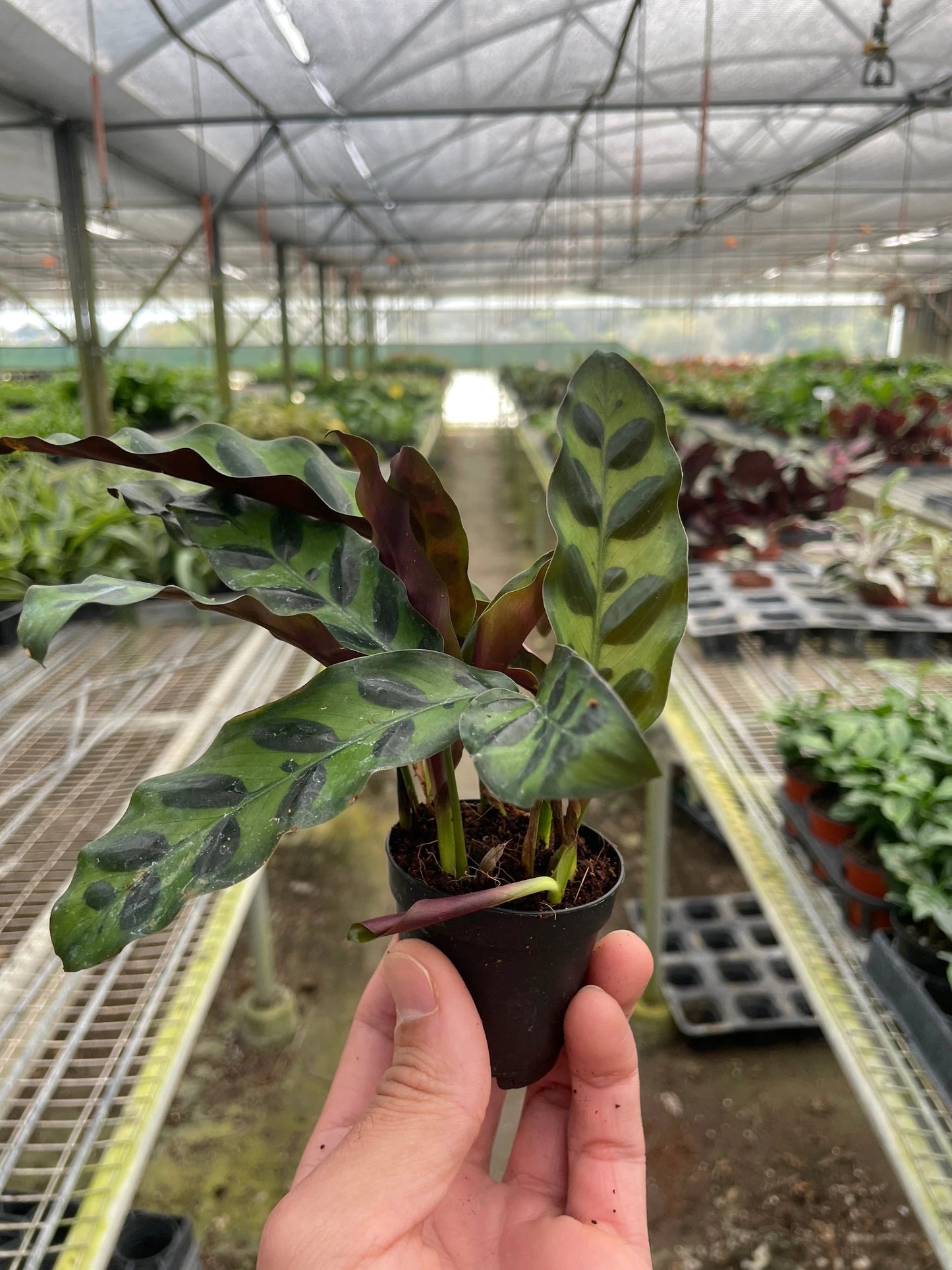
Calathea Rattlesnake (Calathea lancifolia) Low Light Live Houseplant
Sourced from trusted local U.S. plant nurseries
Carefully inspected for pests and diseases before shipping
Shipped with eco-friendly packaging and care tips
Includes heat packs during cold weather to prevent freezing
Calathea Rattlesnake Introduction: Calathea Rattlesnake (Calathea lancifolia) captivates with ripple-edged, lance-shaped leaves and purple undersides. This tropical standout thrives in well-lit indirect light and brings a calming indoor jungle vibe to any room, elevating houseplant care with bold foliage.
Why You Need a Calathea Rattlesnake
The Calathea Rattlesnake elevates living decor with bold foliage and a calming tropical presence. It supports an indoor jungle vibe while fitting into houseplant care routines, thriving in well-draining soil, indirect light, and steady moisture.
Key Features
- Foliage: Rippled lance-shaped green leaves with purple undersides
- Dimensions: Standard shipping size; growth potential up to 2–3 ft indoors
- Growth Habit: Upright, clumping rosette with arching leaves
- Origin: Native to tropical Americas; common houseplant
- Light: Indirect sunlight; tolerates low light but grows best in bright indirect light
- Water: Keep soil consistently moist; water when the top inch dries; use well-draining soil to aid root rot prevention
- Humidity: Prefers higher humidity; place in a bathroom or use a humidifier
Safety Note
Is the Calathea Rattlesnake pet-safe? Yes, the Calathea Rattlesnake is non-toxic to cats and dogs.
Horticulturalist's Pro-Tip
Rotate the plant a quarter turn weekly to promote even growth and prevent leaning toward the light.
Bring this tropical favorite home today and start your lush, low-maintenance sanctuary.
Frequently Asked Questions
How much light does a Calathea Rattlesnake need to stay vibrant?
A Calathea Rattlesnake thrives best in bright, indirect light, though the Calathea Rattlesnake can tolerate lower light conditions at the cost of slower growth.
How often should I water my Calathea Rattlesnake to avoid root rot?
To keep your Calathea Rattlesnake healthy, water only when the top two inches of soil are dry, as the Calathea Rattlesnake is susceptible to root rot in standing water.
What are symptoms of underwatering for the Calathea Rattlesnake?
With a Calathea Rattlesnake, underwatering can cause drooping leaves, loss of color, and a tired appearance—maintain steady moisture as part of Calathea Rattlesnake houseplant care.
What are signs of overwatering or root rot in the Calathea Rattlesnake?
In the Calathea Rattlesnake, look for yellowing leaves, soft or mushy roots, and a musty potting mix—adjust watering and ensure well-draining soil to prevent root rot for the Calathea Rattlesnake.
What humidity level does the Calathea Rattlesnake prefer?
The Calathea Rattlesnake performs best in higher humidity (around 50–60% or more); in dry homes, group plants together to simulate an indoor jungle and support Calathea Rattlesnake houseplant care.
What soil mix is best for the Calathea Rattlesnake?
Use well-draining soil with good aeration—a lightweight potting mix with peat-based components and perlite or orchid bark works well for the Calathea Rattlesnake to support root health.
Can Calathea Rattlesnake tolerate low light conditions?
Calathea Rattlesnake can tolerate low light, but growth may slow; for the healthiest foliage, provide bright indirect light as part of Calathea Rattlesnake houseplant care.
How do I propagate a Calathea Rattlesnake?
Propagate a Calathea Rattlesnake by separating offsets during repotting and ensuring each division has healthy roots; maintain high humidity to support Calathea Rattlesnake propagation and growth.
Is the Calathea Rattlesnake safe for pets?
Yes, the Calathea Rattlesnake is non-toxic to cats and dogs, making it a pet-friendly addition to your indoor jungle space.
How often should I mist my Calathea Rattlesnake to maintain humidity?
Regular misting helps the Calathea Rattlesnake maintain humidity levels ideal for indoor jungle spaces; aim for consistent moisture without waterlogging to support Calathea Rattlesnake health.
What temperature range is ideal for the Calathea Rattlesnake?
Maintain room temperatures around 65–75°F (18–24°C) for the Calathea Rattlesnake to optimize foliage vitality and prevent stress in houseplant care.
How can I prevent brown leaf tips on the Calathea Rattlesnake?
Brown tips on the Calathea Rattlesnake often indicate dry air, fluoridated water, or salt buildup; increase humidity, use distilled water, and flush salts to protect Calathea Rattlesnake growth.
What pests commonly affect the Calathea Rattlesnake and how do I treat them?
Common pests on the Calathea Rattlesnake include spider mites and mealybugs; treat with gentle, plant-safe insecticidal soap and increase airflow to protect your Calathea Rattlesnake in an indoor jungle setting.
Does the Calathea Rattlesnake require repotting and how often?
Repot the Calathea Rattlesnake every 1–2 years or when roots show through the drain holes; use well-draining soil to support root health and Calathea Rattlesnake growth.
What signs indicate it’s time to repot the Calathea Rattlesnake?
Indicators include roots circling the pot, slow growth, and a compacted soil mix in the Calathea Rattlesnake; choose a slightly larger container and refresh the well-draining soil.
What fertilizer schedule suits the Calathea Rattlesnake?
Feed the Calathea Rattlesnake with a balanced, diluted fertilizer every 4–6 weeks during the growing season; avoid over-fertilizing to prevent salt buildup in Calathea Rattlesnake soil.
How do I prune the Calathea Rattlesnake for a fuller plant?
Trim yellowing or damaged leaves from the Calathea Rattlesnake base and prune leggy growth to encourage a fuller appearance; regular pruning supports healthy Calathea Rattlesnake houseplant care.
Is the Calathea Rattlesnake safe for children?
Calathea Rattlesnake is not known to be highly toxic to children; however, prevent ingestion and supervise curious little ones around houseplants to maintain Calathea Rattlesnake safety.
How can I incorporate the Calathea Rattlesnake into an indoor jungle design?
Use the Calathea Rattlesnake as a focal plant in your indoor jungle, pairing it with humidity-loving companions and grouping for cohesive texture; this supports Calathea Rattlesnake aesthetics and houseplant care healthy growth.
What makes the Calathea Rattlesnake unique among Calathea species?
The Calathea Rattlesnake stands out with its ripple-edged, lance-shaped leaves and purple undersides, creating dramatic contrast and an unmistakable indoor jungle vibe—an essential feature for distinctive Calathea Rattlesnake houseplant care.
Have a question?


Calathea Rattlesnake (Calathea lancifolia) Low Light Live Houseplant
We Stand Behind Our Brand